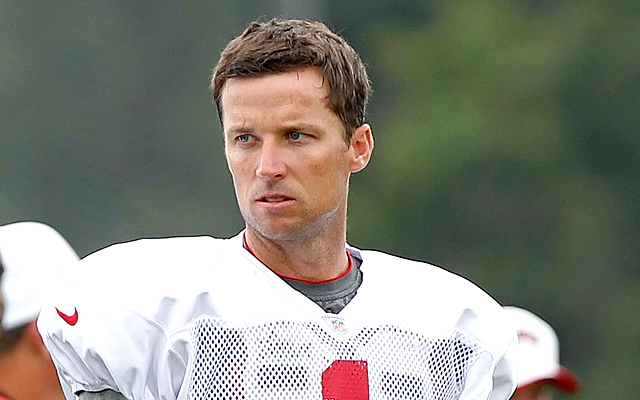
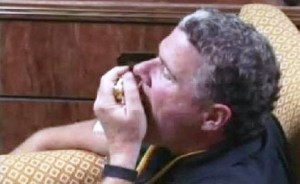
Joe just shook his head yesterday. No, it was not because he was savoring the fact he just demolished the greatest sandwich in the free world — an authentic Primanti Brothers behemoth.
Joe shook his head in amazement of what may very well be an NFL record. With recent roster moves since the original final 53-man roster was announced, the Bucs now have four guys on the defensive line who were third-day draft picks in 2013.
That just blows Joe’s mind. Three is amazing and does say something about the prowess of Bucs rock star general manager Mark Dominik. But now four? That tells Joe the defensive front was much, much thinner than those outside of One Buc Palace imagined.
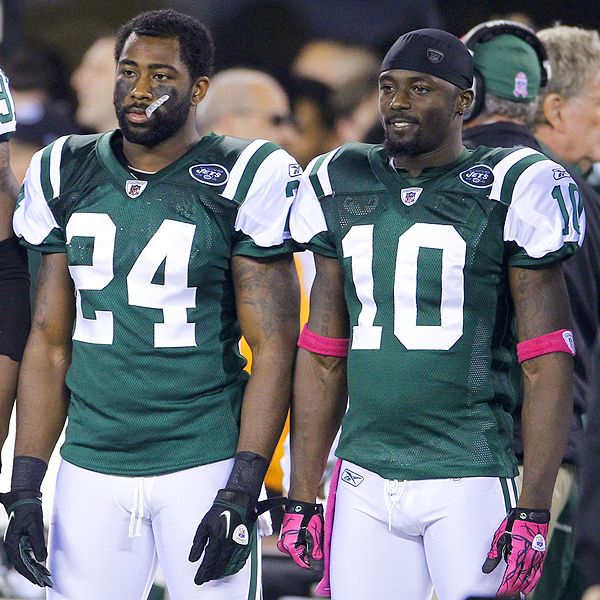
But the wild card here, so believes Pat Yasinskas of ESPN.com, is that Darrelle Revis will help the pass rush. Yes, a cornerback. Yasinskas brings ammo to this discussion, based on what the Jets and their coach, Capt. Lou Albano, did in rushing the passer with Revis in the secondary.
Revis has the ability to shut down one side of the field. In theory, that should allow the Bucs the opportunity to bring extra pass rushers. That’s something that worked quite well for the New York Jets when they had Revis.
From 2008 through 2012, the Jets brought five or more pass rushers on 40 percent of dropbacks by opponents, according to ESPN Stats & Information. That figure ranked third in the NFL. The Jets held opponents to a 55-percent completion rate, which ranked No. 1 in the league, and an average of 6.4 yards per attempt which ranked second in the league.
This is an interesting thought. It’s hardly a state secret the Bucs are uncovering every rock imaginable (short of them signing a proven pass rusher as a free agent in the offseason) to find a way to get at the quarterback.
If the Bucs blitz two guys, as Yasinskas hints, perhaps both David and/or Barron, there simply won’t be enough blockers to stop six (seven?) pass rushers. It’s simple math.
The way Dashon Goldson can play centerfield, it should allow Barron to rush the passer on clear passing downs. Joe’s of the belief that Barron’s going to have to live up to his high draft status or Bucs fans will start kvetching louder about Dominik passing on linebacker Luke Kuechly for Barron.













 One of college football’s most interesting characters was the Buccaneers wide receivers coach last year, P.J. Fleck.
 Cornerback Danny Gorrer’s preseason started great with an interception of Joe Flacco, but Gorrer blew his groin that night and surgery a couple of weeks ago has lost him for at least half of 2013.
 If Lavonte David cranks out another nine seasons like the one he turned in last year, the Bucs linebacker will be talked about in the same breath as Derrick Brooks. David was that good.
 There’s a stink that keeps swirling around national media about Greg Schiano having locker room issues.
 Safety Mark Barron started his pro career coming off double hernia surgery last season. He got off to a strong start, but clearly hit a rookie wall and finished up as an every-game starter for arguably the worst secondary in NFL history.
 If one is to believe the words from Jets coach Capt. Lou Albano, he still doesn’t know who will start for his team at quarterback when the Jets host the Bucs in the New Jersey Swamplands Sunday.
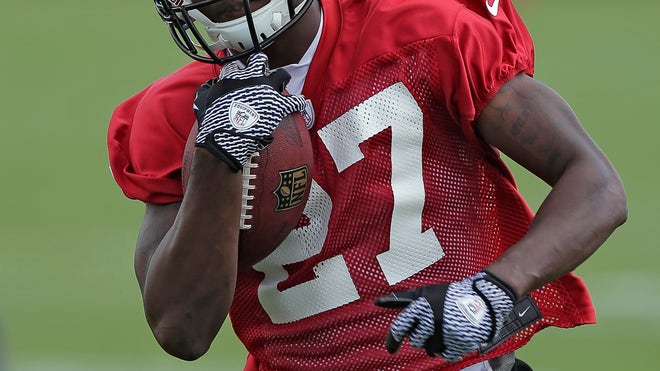
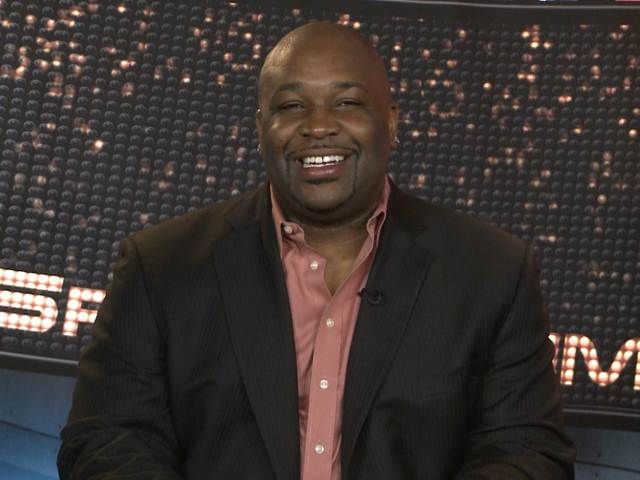
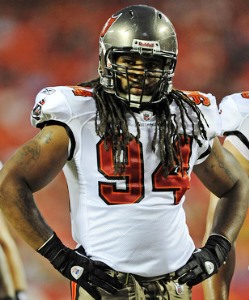
 The Bucs pulled a surprise move yesterday signing the pride of Bowling Green and the MAC Defensive Player of the Year, DT Chris Jones, a rookie sixth-round pick of the Texans. Jones was waived by the Texans and gobbled up by the Bucs.
 Joe was very pleased yesterday to learn that Carl Nicks wasn’t designated to open the 2013 season on the physically unable to perform (PUP) list. That would have meant the All-Pro guard would have been shelved until Week 7, missing six games.